
In a nutshell: Your first affiliate post doesn’t need to sell anything. Share what you’ve started and why, keep it short and honest, and invite anyone curious to ask. Leave the link out or point to your bio. Then post it and put your phone down. The first one is always the hardest.
I remember writing my first post about my online business. I wrote it, deleted it, wrote it again, and left it in my drafts for days. I felt so stupid, but then i decided to see what actually happens when i posted it…
Thats when things started to surprise me, people started commenting, then following, then asking about what I did. Yes it took a little time, but now when I post I get lots of comments, questions and people still wanting to know what I do, so my advice,
Draft a post, read it, then post it. You need to trust the process. Once you get your head around that. the rest is history …
If your thumb is hovering over the post button right now, this is for you.
Why the first post feels so scary
It’s the moment it becomes real. People you know might see it. Someone might ask questions you can’t answer. Someone might not respond at all, which somehow feels worse.
Here’s the thing: most people will scroll past. A few will be curious. Hardly anyone will think about it as much as you are.
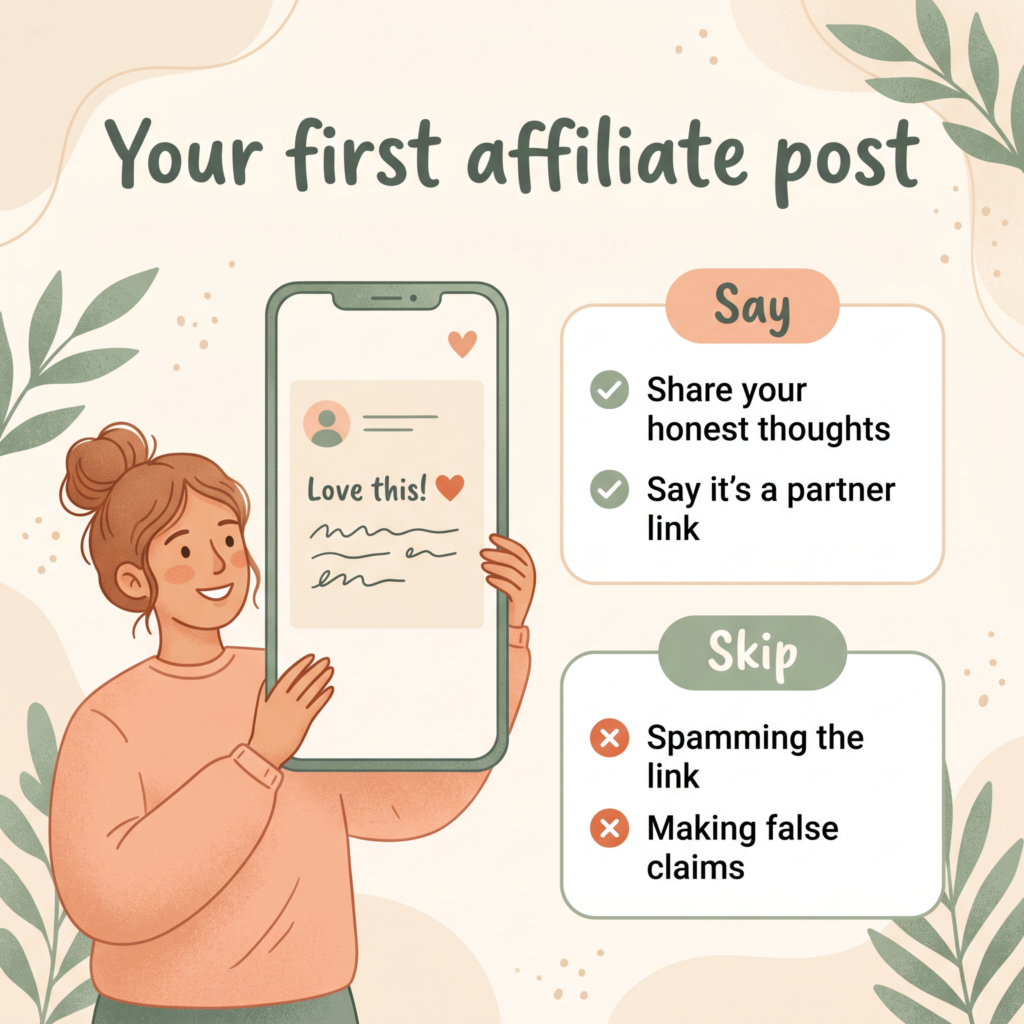
What a good first post includes
- What you’ve started. In plain words.
- Why. One honest reason.
- An invitation. “Ask me anything” or “I’ll be sharing what I learn”.
That’s it. No link needed. No big claims.
Five first post examples you can adapt
1. The honest beginner
“I’ve started learning affiliate marketing. I’m a complete beginner, doing it in short bursts around family life. I’ll share what I learn as I go, including the mistakes.”
2. The “testing it for you”
“I’ve joined a programme to learn how online marketing works, and I’m going to report back honestly on what it’s really like. If you’ve ever wondered about this stuff, follow along.”
3. The question post
“Has anyone else ever wanted to try something online but been too nervous to start? I finally did this month. Small steps. Curious who else is in the same boat.”
4. The lesson post
“One thing I’ve learned in my first week of affiliate marketing: you don’t need to be techy. The hardest part so far has been pressing ‘post’.”
5. The gentle pointer
“A few people have asked what I’m up to online. I’ve put the free programme I’m using in my bio. No pressure, just there if you’re curious.”
What to leave out
- Claims about earnings. Even hints. They put people off and can cause problems.
- Pressure and fake deadlines. Let people decide in their own time.
- A wall of text. Short is kinder.
- Lots of exclamation marks. Calm reads as confident.
- Tagging lots of friends. Let people come to you.
After you press post
- Put your phone down for an hour.
- Reply kindly to anyone who comments or messages.
- Don’t measure it by likes. First posts often get very few. I wrote about why nobody comments on your posts and it’s more normal than you’d think.
- Post again in a couple of days. Something helpful, no link.
Where to point people who are curious
When someone does ask, it helps to have somewhere calm to send them. Mine is my ClickBank Profit Club page, which offers free gifts in exchange for an email, then sends helpful emails that are already written. So I’m not having to explain everything in comments. Your link in bio is a good home for it.
Get your own ClickBank Profit Club page
Quick questions
What should my first affiliate marketing post say?
Keep it simple and honest: what you’ve started, why, and an invitation for anyone curious to ask or have a look. You don’t need to include a link in your very first post.
Should I put my affiliate link in my first post?
It’s often better not to. A first post that shares your story and invites questions feels more natural. You can point people to the link in your bio or share it in a later post.
What if nobody responds to my first post?
That’s very common and doesn’t mean you’ve done anything wrong. Most people scroll without reacting. Keep posting helpful things regularly and responses build over time.
How do I get over the fear of posting?
Write the post, wait an hour, read it once more, then post it and put your phone down. The first one is the hardest. It gets easier quickly.