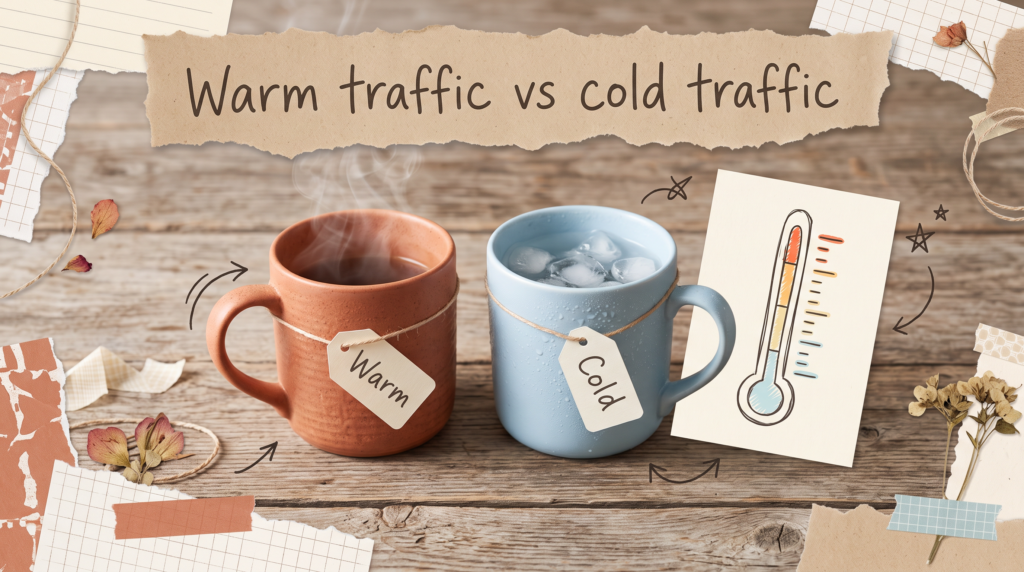

In a nutshell: Cold traffic is people who’ve never heard of you. Warm traffic is people who already know you a bit, like followers or email subscribers. Warm traffic clicks and signs up far more readily. Cold traffic needs warming up first, usually with a free gift and follow-up emails. Matching your message to the temperature is what changes results.
When I started, I’d share my link in a few places and get wildly different results. A post to people who knew me would get a couple of sign-ups. The same link somewhere new would get clicks and nothing else.
I assumed the link was broken, or the offer was wrong. It wasn’t either. It was the temperature of the people seeing it.

What is cold traffic?
Cold traffic is people who’ve never heard of you. They don’t know your name, they don’t know if you’re trustworthy, and they’ve got no reason to listen to you yet.
Examples:
- Someone seeing a paid ad from you for the first time
- Solo ad clicks from someone else’s email list
- A stranger finding your post through a hashtag
What is warm traffic?
Warm traffic is people who already know you a bit. They’ve seen your posts, read your blog, or opened your emails. There’s some trust there already.
Examples:
- People who follow you and have seen a few of your posts
- Readers coming back to your blog
- Your email subscribers
Some people also talk about hot traffic: people who already know, like and trust you and are ready to act, like a subscriber who’s replied to your emails.
Why the same link gets totally different results
Imagine you’re out and someone you’ve never met walks up and says, “You should join this thing.” You’d be wary, wouldn’t you?
Now imagine a friend you trust says the same thing over a cuppa. Completely different reaction.
Same message. Same link. Different temperature.
That’s why sending cold traffic straight to a sales page so often leads to clicks but no sales. Those people simply aren’t ready yet.
A quick temperature check
| Temperature | Who they are | What to send them |
|---|---|---|
| Cold | Never heard of you | Something free and useful (a squeeze page with a gift) |
| Warm | Know you a bit | Helpful content, your story, a gentle recommendation |
| Hot | Know, like and trust you | A clear offer and a direct link |
How to warm up cold traffic
- Lead with something free. Don’t ask strangers to buy. Ask them to grab something genuinely useful.
- Get their email. That’s how you turn a one-time visitor into someone you can keep helping.
- Follow up with useful emails. Teach something, share a story, be honest. Trust is built over several contacts, not one.
- Mention your offer gently, and more than once. Most people need to see something several times before they act.
- Be patient. Warming people up takes days or weeks, not minutes.
Where OLSP helps with this
This is one of the reasons I like OLSP for beginners. When someone joins through your MegaLink, the system does a lot of the warming up for you: follow-up emails, training and live sessions. So even if they arrive cold, they’re not left on their own after the first click. You still need to bring people to your link, but you’re not having to build the whole warm-up process yourself.
And if you grab the MegaLink through me, my bonuses include 100 social media posts, which are handy for warming up your own followers too, plus two other bonuses worth over $100 for free waiting inside your bonus vault once you grab the megalink.
Quick questions
What is cold traffic?
Cold traffic is people who have never heard of you before, such as someone seeing a paid ad or a stranger’s post for the first time. They need more time and trust before they’ll act.
What is warm traffic?
Warm traffic is people who already know you a bit: followers who’ve read your posts, blog readers, or people on your email list. They’re more likely to click and sign up.
Is cold traffic bad?
No. Everyone starts cold. Cold traffic just needs a different approach, usually a free gift and follow-up emails, rather than a straight sales pitch.
How do you warm up cold traffic?
Offer something genuinely useful for free in exchange for an email, then follow up with helpful emails and content over days or weeks. Trust builds through repeated, useful contact.