
In a nutshell: A solo ad is where you pay someone with an email list to send their subscribers to your page. They can be worth it for beginners, but only if you send the clicks to a squeeze page (so you build your own list), start with a small test order, and buy from sellers with genuine reviews. Sending solo ad clicks straight to an affiliate link usually wastes money.
If you spend any time in affiliate marketing groups, someone will mention solo ads within about five minutes. Some people swear by them. Others say they’re a waste of money.
The truth, as usual, sits somewhere in the middle. So here’s an honest beginner’s guide: what solo ads are, how they work, and what to check before you spend anything.
What are solo ads?
A solo ad is a paid email. You find someone who has an email list in your area (say, affiliate marketing or making money online). You pay them, and they send an email to their subscribers with a link to your page.
It’s called “solo” because your offer is the only thing in that email. You’re not sharing space with other adverts.
Usually you don’t pay per email sent. You pay for a set number of clicks. So you might order, say, 100 clicks, and the seller keeps sending until roughly that many people have clicked through to your page.
How buying a solo ad works, step by step
- You have a page ready to send people to (ideally a squeeze page with a free gift).
- You choose a seller, usually on a solo ad marketplace.
- You pick how many clicks you want and pay.
- The seller emails their list with a link to your page.
- Clicks come in, some people sign up, and you track the results.
The pros of solo ads
- They’re quick. Social media and blogging can take months to bring visitors. A solo ad can bring clicks within days.
- They’re targeted. You’re reaching people who’ve already shown interest in your topic by joining a list.
- They’re good for testing. You can find out quickly whether your squeeze page and free gift actually work.
The cons (and they’re real)
- Quality varies wildly. Some sellers have engaged lists. Others send low-quality or even fake clicks.
- It costs money. Unlike free traffic, every click has a price. If your page doesn’t convert, you’ve lost it.
- The people are “cold”. They don’t know you yet. They need time and follow-up before they trust you.
- It doesn’t build long-term traffic. When you stop paying, the clicks stop.
The biggest solo ad mistake beginners make
Sending the clicks straight to an affiliate link.
Think about it. Someone who’s never heard of you clicks an email, lands on a sales page, and doesn’t buy (most won’t, the first time). They’re gone forever. You paid for that click and got nothing to keep.
Send them to a squeeze page instead, and even the ones who don’t buy today are on your list. You can keep helping them for weeks. That’s where the value is.
My checklist before buying a solo ad
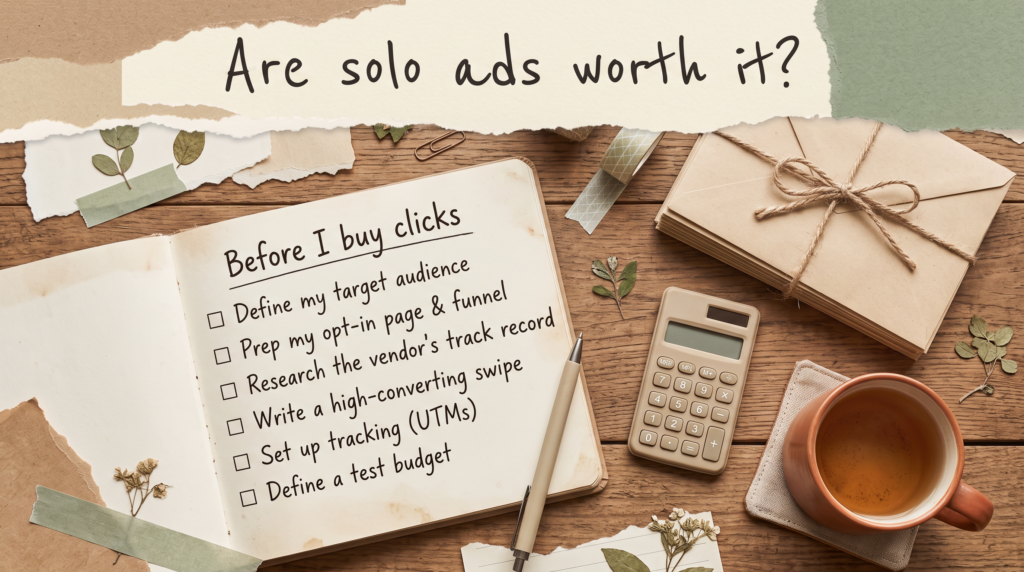
- Is my squeeze page tested? Send some free traffic to it first if you can. Make sure the form actually works.
- Is my email follow-up ready? Your welcome email and next few emails should be set up before anyone arrives.
- Does the seller have genuine, recent reviews? Look for ratings from lots of different buyers, not just a handful.
- Am I starting small? Buy the smallest order you can as a test. Don’t go big on a seller you haven’t tried.
- Can I track the results? Know how many clicks you got, how many signed up, and (later) whether anyone bought.
- Can I afford to lose this money? Treat your first solo ad as a learning cost, not an investment you expect back.
I have used solo ads for a while now, I don’t use them every day, I use them when we get new things to promote, a limited time offer, or an event, they have worked well for me, I would recommend starting off very small like 100 clicks and see how that goes, see if you get opt-ins or sales and hopefully both, don’t always stay with the same seller, do research first, I have used a few different ones with various results, either way you are still building you list. Only spend what you can afford to spend.
Where to buy solo ads
I’d always suggest using a marketplace rather than paying a stranger directly. A good marketplace shows ratings from other buyers and usually has some protection if clicks don’t arrive or look dodgy.
Udimi is one of the best-known solo ad marketplaces, and it’s one of the options on my traffic sources page, along with the other places I use.
So, are solo ads worth it?
They can be, if you go in with a tested squeeze page, a follow-up sequence ready, a small budget and realistic expectations. They’re not worth it if you’re hoping a few clicks to an affiliate link will turn into instant sales.
If you don’t have a squeeze page and follow-up emails yet, sort that first. The ClickBank Profit Club’s free level gives you both, ready-made, so you’d have somewhere sensible to send any traffic you buy.
Get your free ClickBank Profit Club funnel
Quick questions
What are solo ads?
A solo ad is when you pay someone who has an email list to send an email about your offer to their subscribers. You usually pay for a set number of clicks.
Are solo ads worth it for beginners?
They can be, if you send the clicks to a squeeze page to build your own list, start with a small test, and buy from sellers with genuine reviews. They’re rarely worth it if you send clicks straight to an affiliate link.
How much do solo ads cost?
Prices vary a lot between sellers and change over time, so check current prices on the marketplace. Always start with the smallest order you can to test quality before spending more.
Where do you buy solo ads?
There are solo ad marketplaces where sellers list their packages and buyers leave reviews. Udimi is one of the best-known. Buying through a marketplace with ratings and some protection is safer than paying a stranger directly.
Why didn’t my solo ad get any sign-ups?
Common reasons include poor-quality clicks from the seller, a squeeze page that doesn’t match the audience, or a free gift that isn’t appealing. Test one thing at a time.